
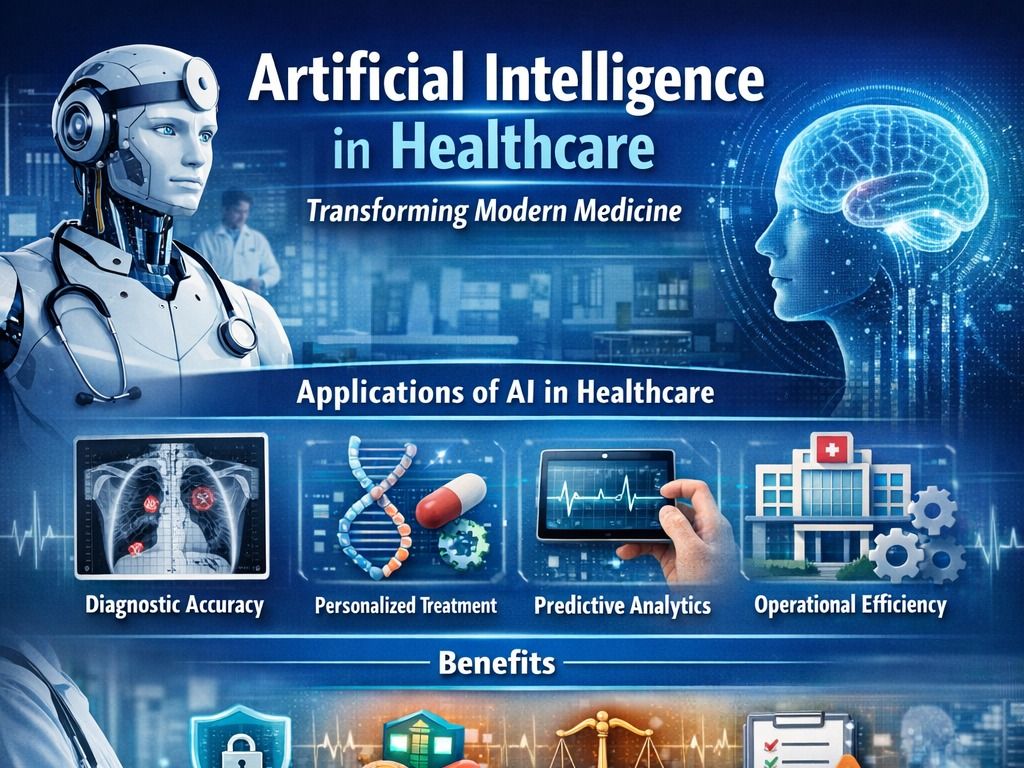
Artificial Intelligence in Healthcare: Transforming Modern Medicine
Artificial Intelligence (AI) is no longer just a futuristic concept — it’s already reshaping the way medicine is practiced and healthcare is delivered globally. As digital technologies advance, AI is emerging as a powerful tool that can improve diagnostics, enhance clinical decision-making, and streamline healthcare systems. This transformation is enabling doctors, hospitals, and healthcare providers to deliver more accurate, efficient, and personalized care than ever before.
What Is AI in Healthcare?
AI refers to computer systems that can perform tasks typically requiring human intelligence — such as learning from data, recognizing patterns, and making predictions. In healthcare, this means using algorithms and machine learning models to analyze medical data, interpret images, and assist clinical teams in decision-making.
AI does not replace clinicians — instead, it augments their abilities, helping them see deeper insights within complex medical data.
How AI Is Being Used in Medicine Today
1. Diagnostic Accuracy and Speed
One of the most promising applications of AI is medical imaging interpretation. AI models can analyze X-rays, MRIs, CT scans, and pathology slides faster than traditional approaches, often with accuracy comparable to specialist clinicians. For example:
Recognizing early signs of cancer
Detecting abnormalities in radiological images
Supporting pathology diagnoses
By identifying patterns that may be subtle or missed by the human eye, AI enhances early diagnosis and outcomes.
2. Personalized Treatment Plans
AI systems are capable of processing large volumes of patient data — including symptoms, genomics, history, and lab results — to recommend personalized treatment options. This is particularly useful for complex conditions like cancer or chronic diseases where individualized therapy can significantly impact outcomes.
3. Predictive Analytics
Healthcare providers can use AI to predict future health risks. For example:
Predicting the likelihood of hospital readmissions
Forecasting complications such as sepsis
Giving early warnings before a patient’s condition worsens
These insights help clinicians intervene earlier and tailor care more effectively.
4. Operational Efficiency
AI also helps hospitals and clinics run more efficiently. Intelligent systems can automate administrative tasks like:
Scheduling appointments
Managing electronic health records
Streamlining billing and claims processes
By reducing administrative burden, healthcare providers can focus more on patient care.
Challenges and Considerations
While AI offers enormous potential, it also presents challenges that must be addressed:
Data Quality and Availability
AI models rely on high-quality data for training. Inconsistent or incomplete data can lead to inaccurate predictions or biased outcomes.
Ethics and Trust
Questions about data privacy, algorithm fairness, and interpretability remain central to the adoption of AI in healthcare. Ensuring transparency and fairness is essential to build trust among clinicians and patients.
Regulatory and Integration Barriers
AI tools must meet regulatory standards to be used in clinical practice. Integrating them into existing health systems also requires investment and infrastructure upgrades.
The Future of AI in Healthcare
The integration of AI is steadily expanding across medical disciplines. As machine learning models improve and more clinical data becomes available, AI will continue to enhance:
Precision medicine
Remote patient monitoring
Decision support in primary care
Health system planning and logistics
With continued innovation and thoughtful implementation, AI has the potential to make healthcare more proactive, efficient, and patient-centered than ever before.
You Might Also Like
Continue exploring insights from healthcare leaders
Uncategorized
Pharma Leaders Turn to AI-Driven Data to Bridge Trust, Access and Treatment Gaps
Read Article →
Uncategorized
Bajaj Group Enters Healthcare with ₹2,500 Crore Investment to Build Integrated Network
Read Article →
Uncategorized
Early Warning Signs of Heart Attacks: Why Awareness Can Save Lives
Read Article →More Articles

Uncategorized
India’s Low-Cost Semaglutide: A Turning Point in Diabetes & Weight Management
March 30, 2026

Uncategorized
Why Prevention Is the Real Future of Healthcare
March 23, 2026

Uncategorized
Next-generation influenza vaccines could save millions of lives, finds WHO
February 23, 2026
Uncategorized
Galgotias Episode Triggers Wider Debate on Tech Transparency and Medical Device Regulation in India
February 23, 2026
Trending Magazines
Curated issues and covers highlighting leadership, strategy and innovation.


